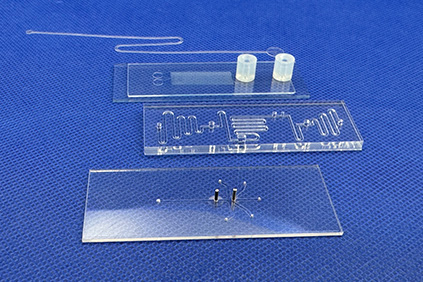
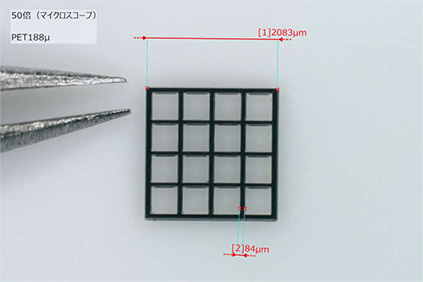
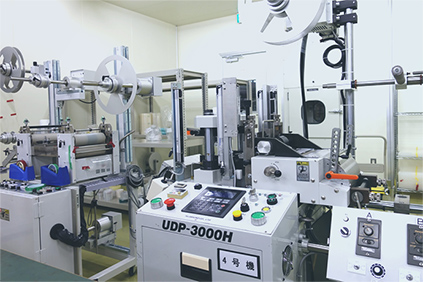
We can precisely laminate tapes and films processed by our company. Using proprietary designed jigs, we can offer fine adjustments between die-cutting and jigs. This allows us to achieve strict lamination tolerances, such as +/- 0.05 mm with simple jigs. Additionally, bubble reduction during lamination is possible through pressure degassing.
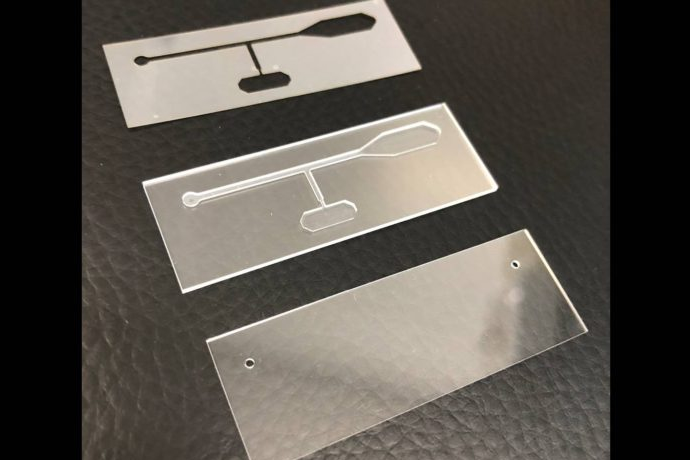
We can offer lamination for films in the following ways:
For lamination Processing not listed above, please feel free to contact us.
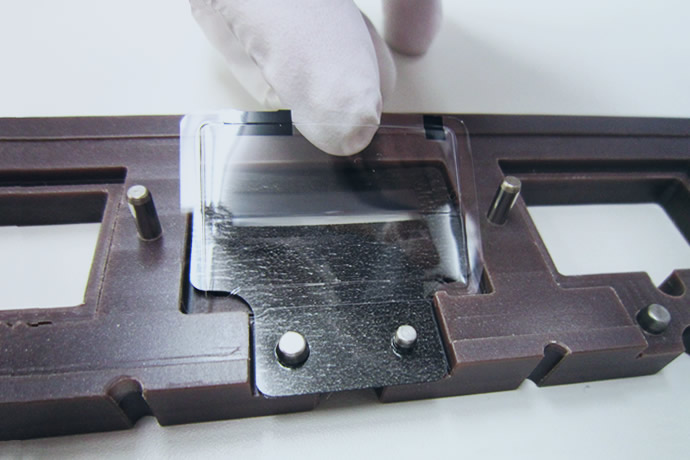
Once we receive a workpiece from the customer side, we can offer from measurement, component drawing creation, jig design to manufacturing.
For laminations requires strict precision, we offer repeated adjustment of molds and jigs after lamination to meet your specified tolerances.
If strict control of adhesive burrs or dust attachment are required, conventional processing of highly adhesive double-sided tape often results in minute burrs or exposed adhesive tends to attach foreign objects.
For laminations using highly adhesive tapes where edge cleanliness is required, we use laser cutting to obtain dried adhesive edges before lamination. This method is ideal for the works to perform under microscopes.
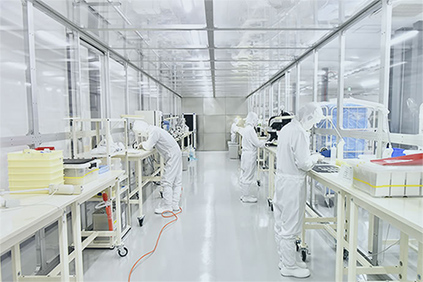
Additionally, we have a super cleanroom (SO Class 1) facility, which is unique in the world.
This super clean environment has fewer than 10 particles of 0.1 micron per 1 m^3. This allows us to perform processing, assembly, and lamination under super cleaned environment.
( Learn more about our super cleanroom)
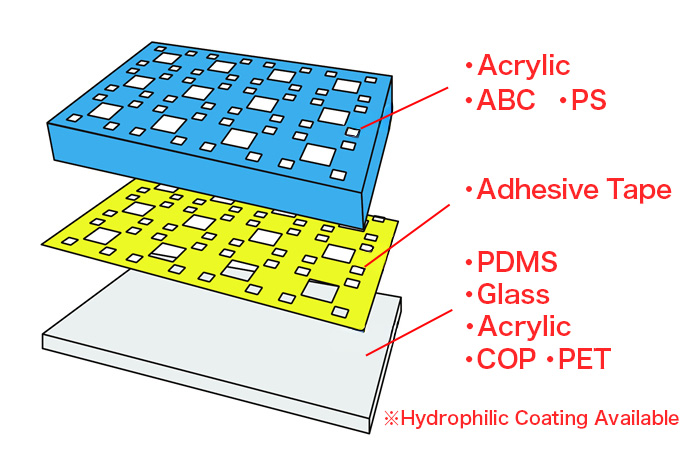
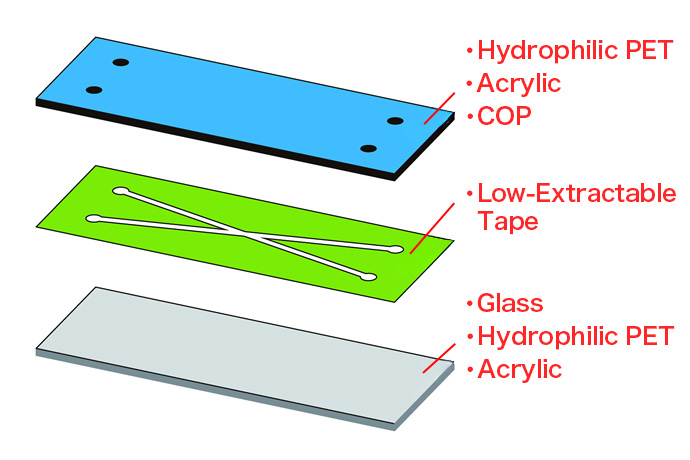
We can apply various functional resins to film surfaces, such as adhesive, hard coat, and high bonding properties.
We will suggest functional films fit to your requirements. With hydrophilicity, the product will be suitable for cell culture intended for medical applications.
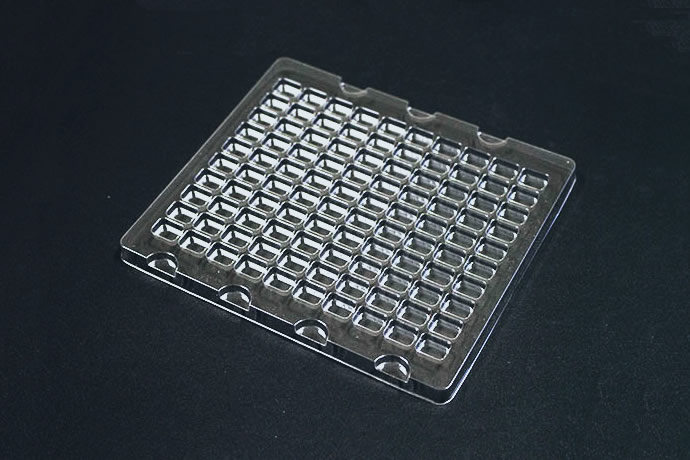
For laminated products, we can ship them in trays upon request.
These trays are designed and manufactured in-house, which allows us to ship in optimized tray for your products.
( Visit our Industrial Tray Manufacturing Website)
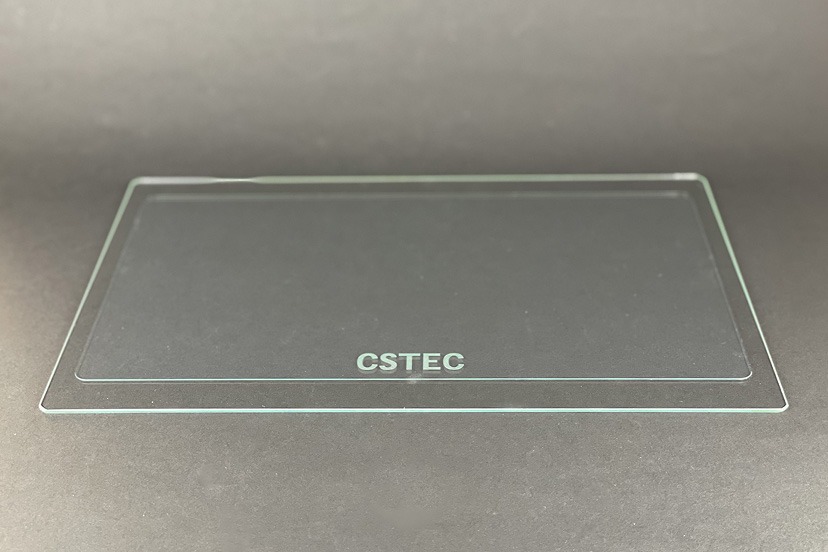
<Customer's Concern>
Wanted to precisely process and laminate super-hard hard-coated film
<CSTEC's Proposal>
As 9H hard-coated film is extremely hard, conventional die-cutting processes causes microcracks. By using a large CO2 laser for processing, we successfully eliminated microcracks.
<Customer's Concern>
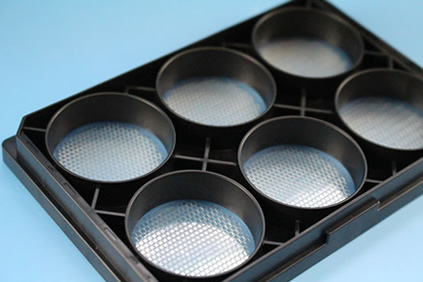
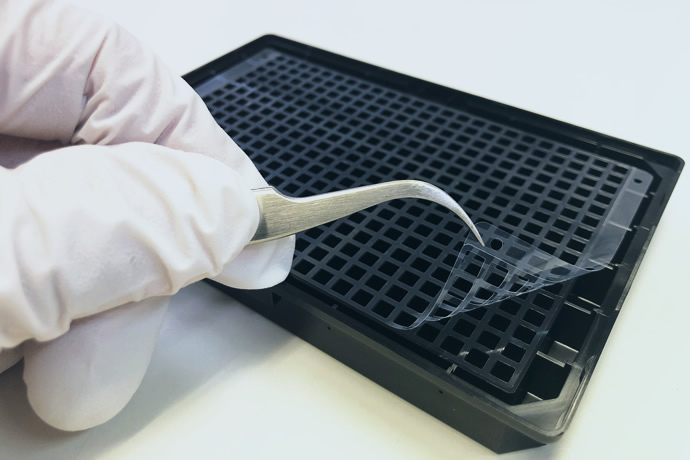
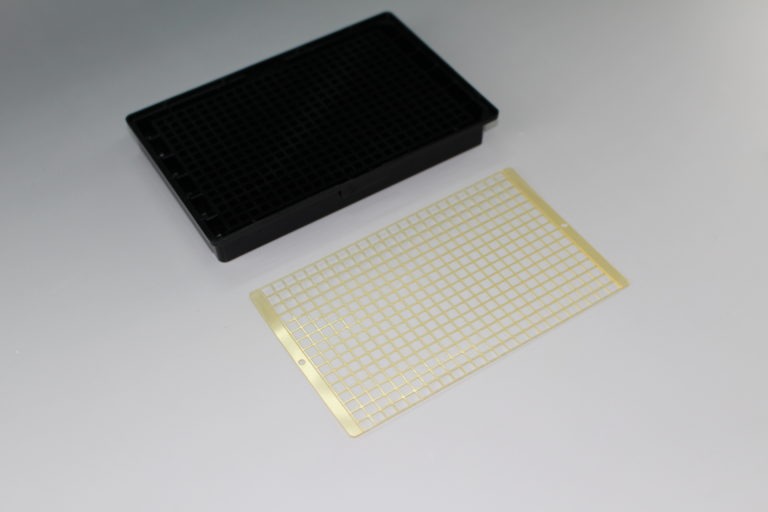
・Wanted to apply specified material to the bottom of microplate, using for cell culture.
・Needed precise lamination of specified material to the bottoms of 96-well and 384-well microplates, which have numerous wells.
<CSTEC's Proposal>
By using laser processing we achieved processing without distortion. For lamination, we used dedicated jigs to meet the customer's required precision.
MOVIE
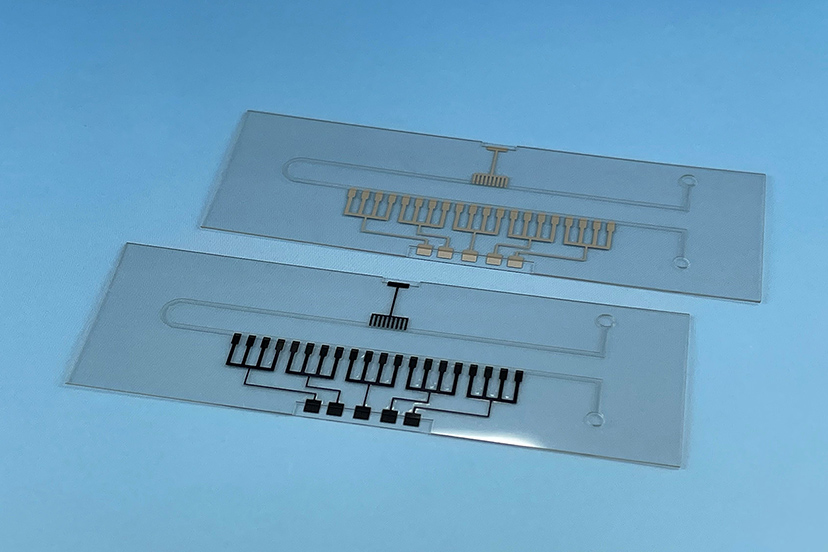
【MOVIE】Microfluidic device with electrodes
MOVIE
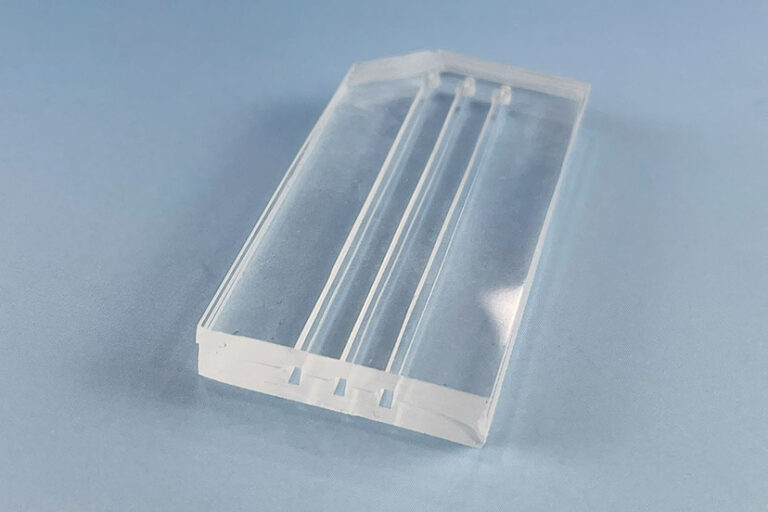
【MOVIE】5 mm channel height PDMS microfluidic channel
MOVIE
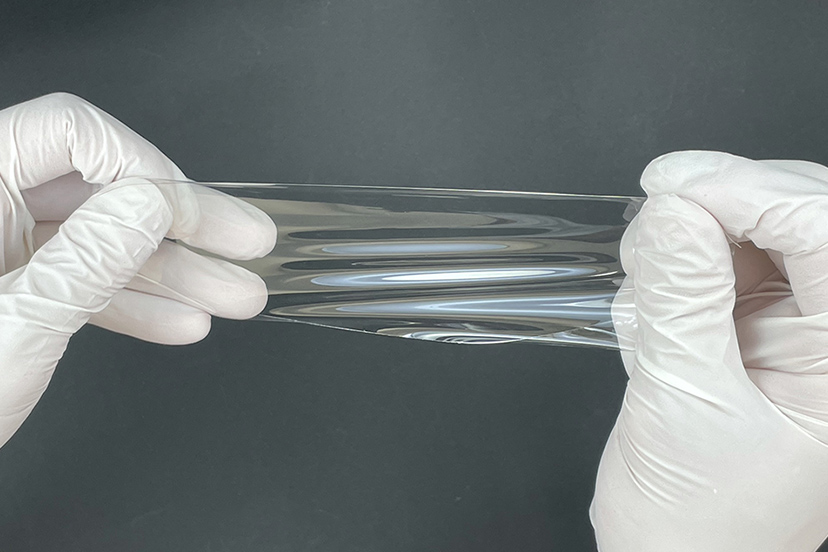
【MOVIE】Ultra-thin PDMS Sheet
MOVIE
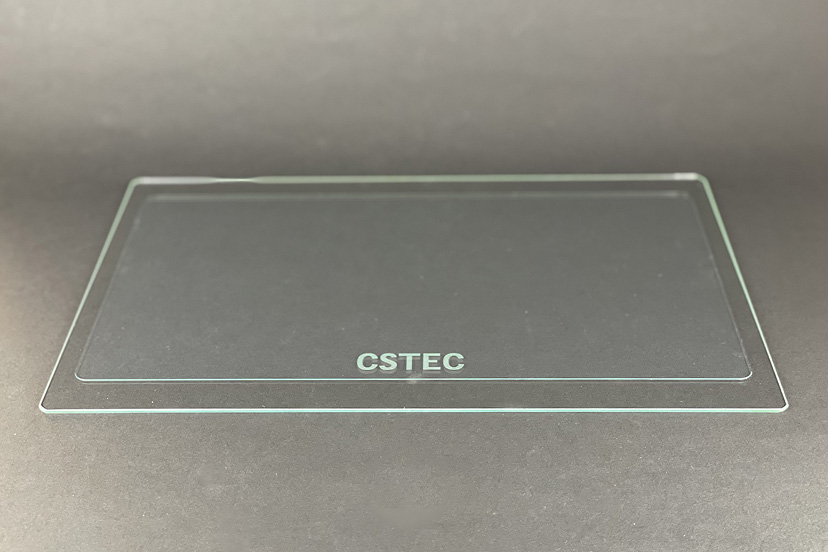
【MOVIE】Lamination of high-hardness 9H hard-coat film, OCA tape, and glass