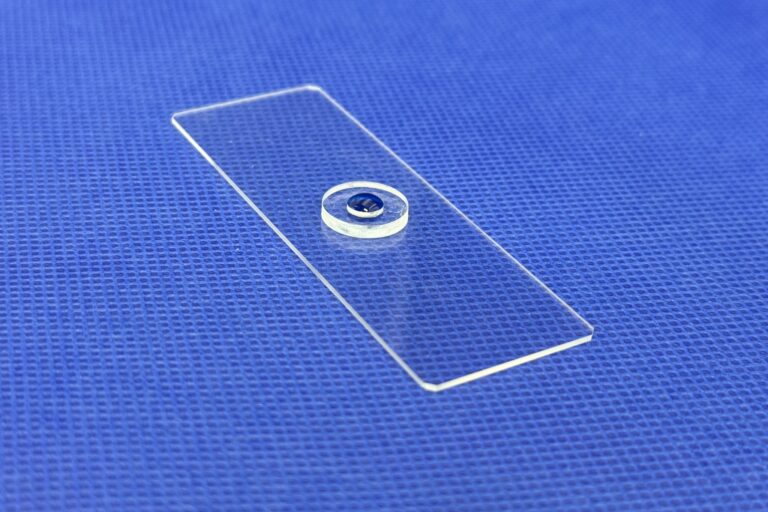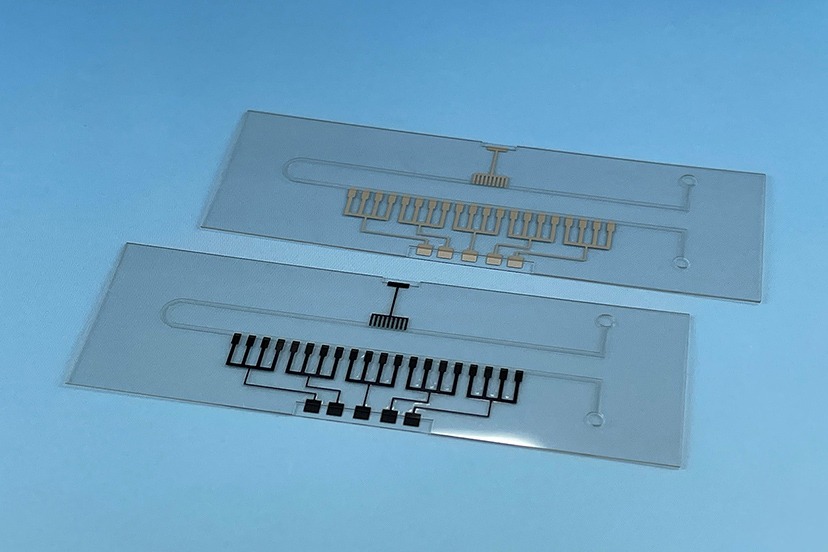
A microchannel is a device with fine channels that precisely manipulate extremely small amounts of liquid or gas. This enables high speed analysis and reactions from small samples, efficient separation and detection, and integration of multiple processes. Its precise fluid control capabilities are used in a wide range of fields, such as life sciences, medicine, chemistry, environment, and food.
At CSTEC, we can promptly prototype microchannels without the molds, according to customer needs. We flexibly combine various materials such as PDMS, COP, glass, and PET to reduce initial costs. Our bonding and integration technology for different materials allows us to handle complex designs. We can also flexibly handle specifications for POCT and R&D. Prototyping from small quantities is available, so please feel free to contact us.
CSTEC can manufacture and process microfluidic devices and microchannel chips, including PDMS microchannels. According to the complexity and height of the channels and other requirements, we will manufacture and process under the optimal production method. We can handle from a single piece to mass production. By applying our tape processing technology, we can create the desired microchannels by using such as double-sided tape or PDMS sheets, or bonding channels and covers fabricated by resin molding or cutting with tape. We contribute to various application fields such as miniaturization of microfluidic devices and peripheral equipment required for POCT, reduction of reaction temperature energy, electrochemistry in microspaces, sensor integration, and automation.
Flowed by capillarity.
Flowed through a wide channel (width: 2 mm).
Flowed through a channel with a complex shape.
Flowed two liquids simultaneously.
Liquid was drawn up by capillarity.
Sandwiched PDMS sheet by molecular binding.
Inserting electrodes into the microchannel enables electrical measurement.
Dispensed reagents (water-soluble ink) into the microchannel.
Split the channel into seven branches.
Pressed with a finger to draw up liquid.
Added a valve to flow two liquids alternately.
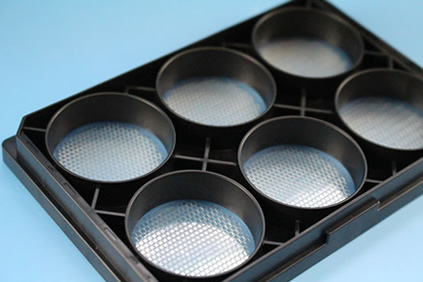
Created a channel inside a 1-well plate. Measurement from the bottom side is possible.
Examples of flowing through various widths.
Microfluidic devices and microchannel chips can generally be divided into three layers: the “channel”, the “bottom” that works as the base, and the “lid” that covers the channel. CSTEC select the most suitable material for each layer based on the required channel depth and process them using methods tailored to the material and lot size. We have successfully delivered microfluidics that meet customer requirements and have earned high evaluations for quality and speed in POCT and cell culture fields.
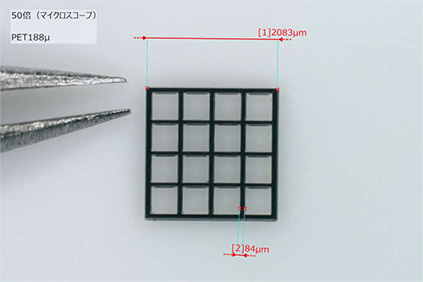
For shallow channels with a depth (less than 0.3 mm), we create channels using low-extraction double-sided tape or PDMS sheets and laminate them with resins such as acrylic or hydrophilic PET for the bottom and lid. Initial costs are low, and for large lot sizes, we manufacture using die-cutting after creating molds. For small lot sizes such as prototypes, we use plotter processing or laser processing. Particularly for narrow channel widths, UV laser processing enables more precise processing at the 20 μm level. We accept microfluidic device prototyping starting from one piece.
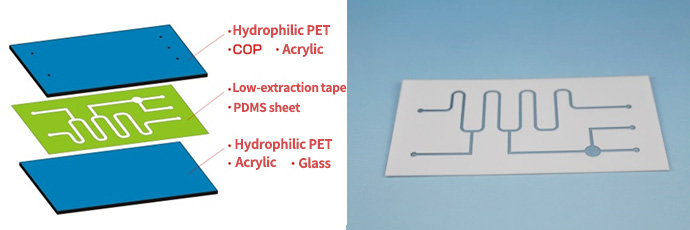
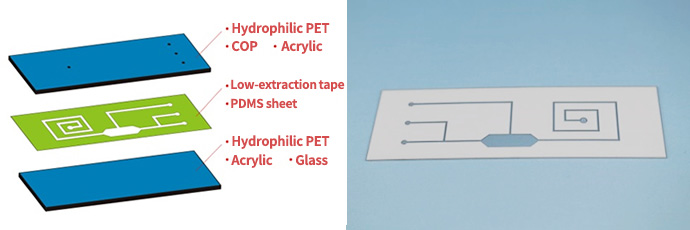
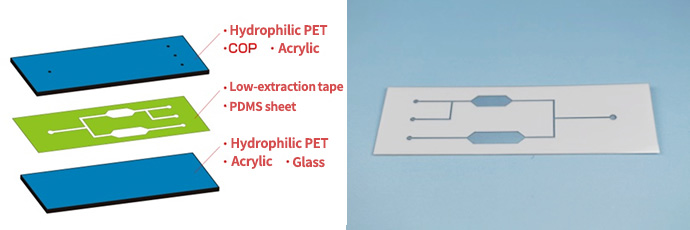
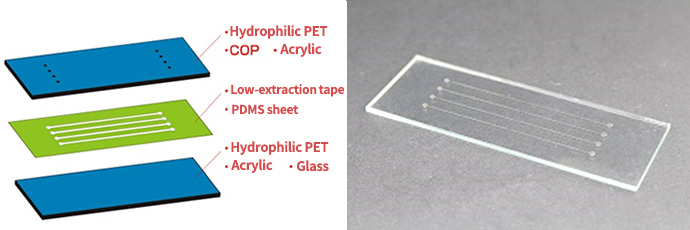
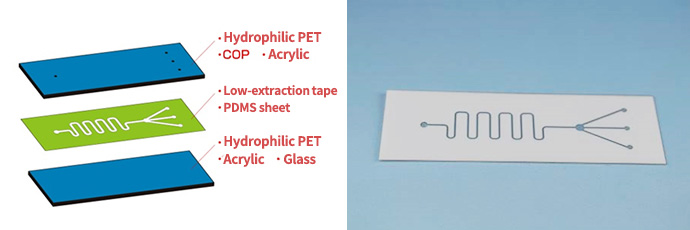
For microfluidic devices requiring complex channel shapes, we process the base materials such as acrylic, cycloolefin polymer (COP), or glass by cutting or molding to create channels, and laminate them with resin lids. For lamination, we use low-extraction double-sided tape cut to match the channel shape, enabling high-precision bonding. Before creating expensive molds for molding, we accept prototypes using cutting starting from one piece. For mass production, disposable chips required for POCT can be assembled accurately and inexpensively by die-cutting and automated lamination.
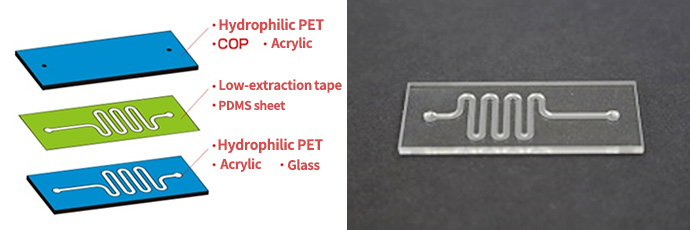
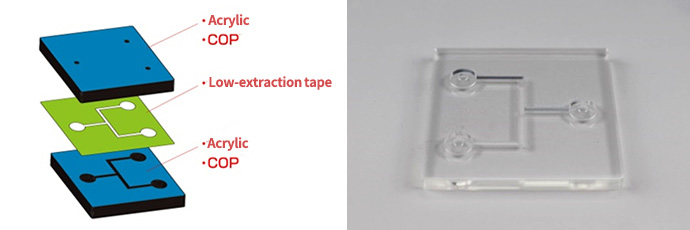
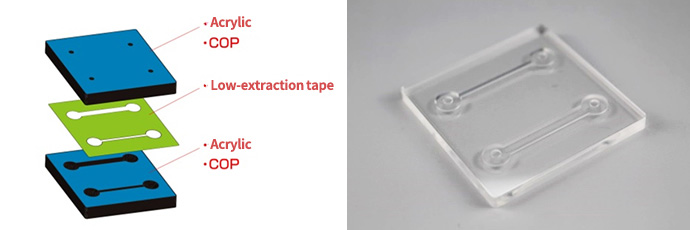
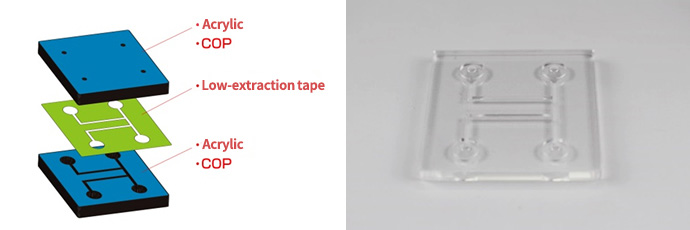
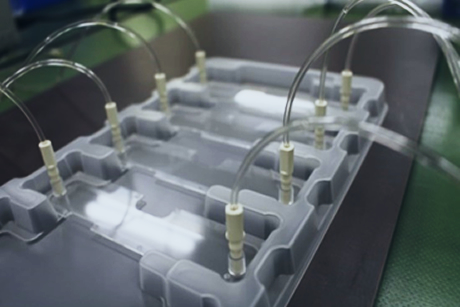
CSTEC can apply hydrophilic coating inside microchannels upon request. Hydrophilic coating is expected to reduce protein adsorption and cell adhesion.
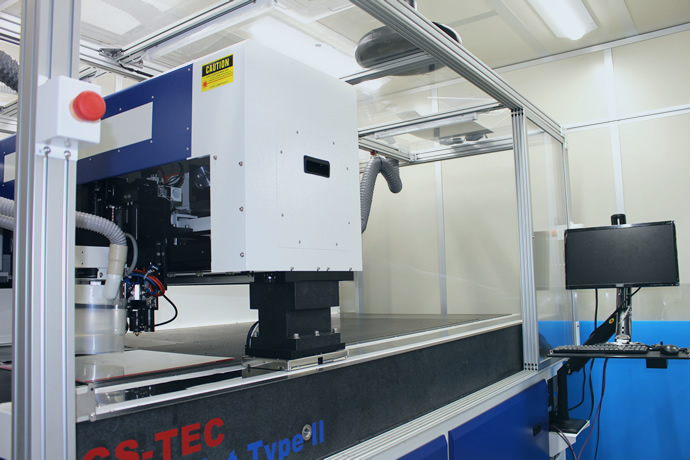
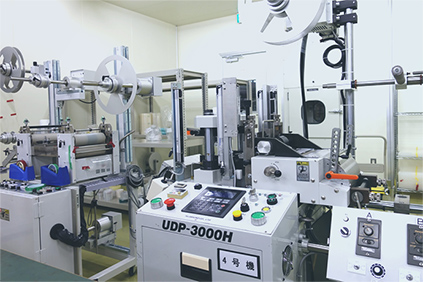
CSTEC is fully equipped for the production and processing of microchannel chips, including PDMS microchannels. Our facilities include precision press machines, laser processing machines, and plotter machines for channel processing, sprayer for hydrophilic coating, equipment for laminating components, pressure degassing devices to reduce air bubbles during lamination, and ink-jet devices for LOT number printing inside PDMS microchannels.
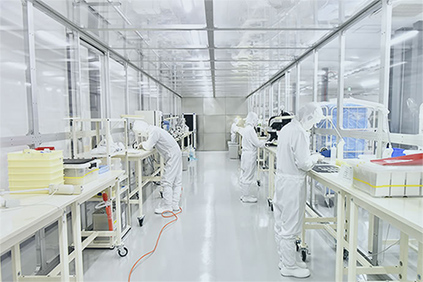
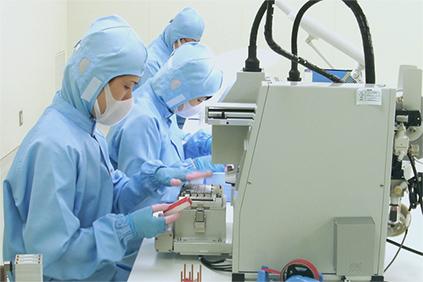
We also have a unique super cleanroom (ISO Class 1) facility, so you can trust us for processing in a clean environment.

No other company can offer such technology and proposals.
CSTEC is our important research partner.
Laboratory of Analytical Chemistry for Pharmaceutical Sciences,
Faculty of Pharmacy, Kindai University
We process laser channels on adhesive sheets and sandwich them between glass or film for the bottom and top, so no initial cost for mold is required. In addition, by laminating multiple layers, we can create channels that are impossible to make with molds.
We can make from one piece. The standard delivery time is about two weeks. If you are in a hurry, please ask us, and we may advance the delivery date.
It depends on the shape, but the minimum width is about 30 μm, and the minimum channel height is 5 μm.
Yes. We will ask your requirements and select the ports. Usually, rubber ports are commonly used.
Yes. We will create a drawing based on a hand-drawn image or after the meeting to confirm your requirements. After confirmation, we will start its production.