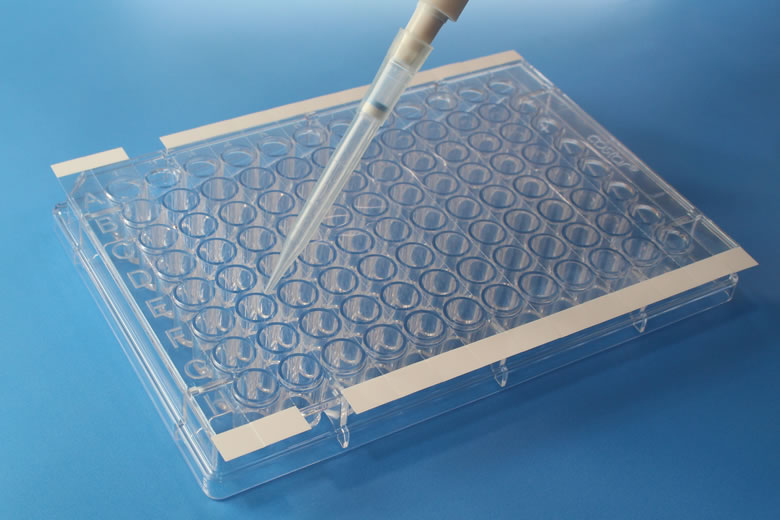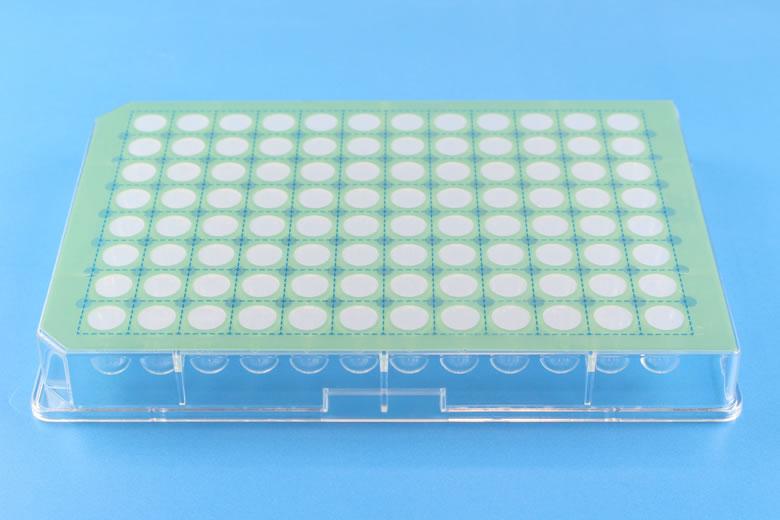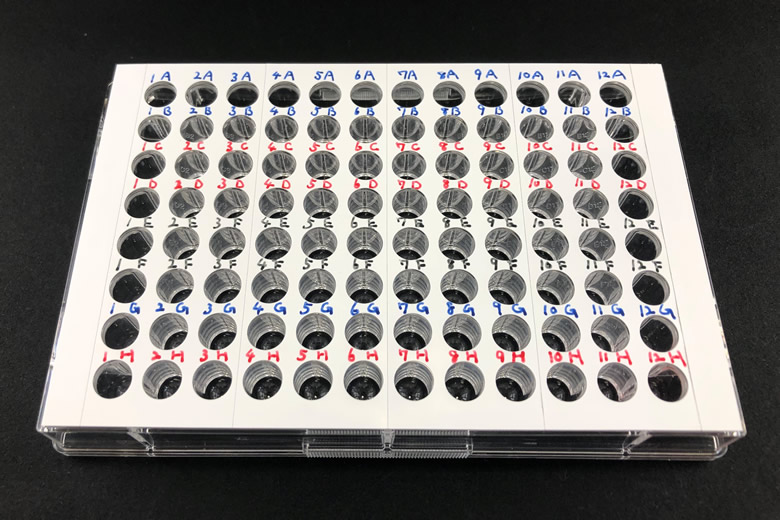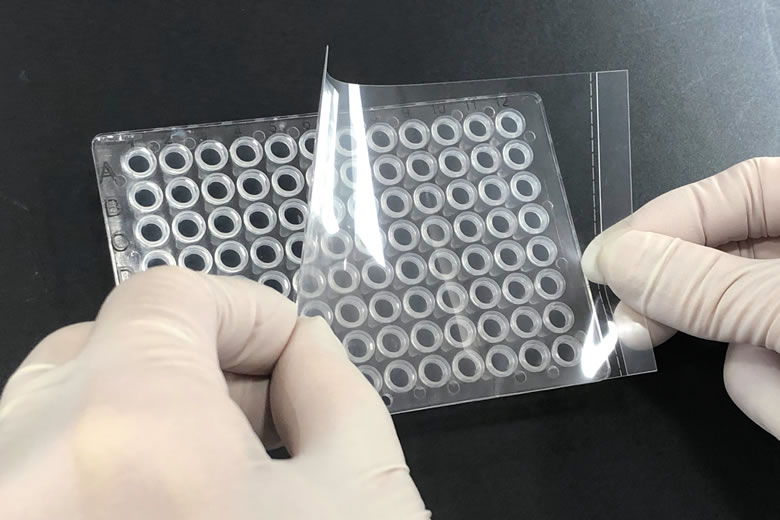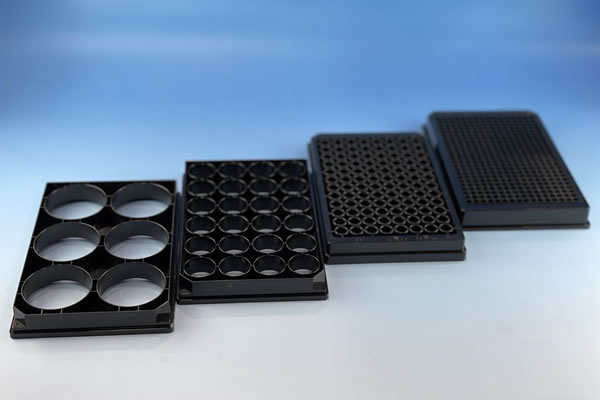
A microplate is an experimental plate with numerous small wells (holes), and used in a wide range of research such as biochemical analysis, cell culture, PCR and etc. Common formats include 96-well and 384-well plates, and applications vary depending on material and coating.
At CSTEC, custom manfacturing of microplate is available to meet various research needs, such as “bottomless microplates.” By our laser processing and precision die-cutting technology, we can achieve highly accurate design. We can provide microplates tailored to the various needs of researchers.
At CSTEC, we can offer processing of microplates used for cell culture and processing / lamination of microplate seals, from a single piece to mass production. We can also manufacture microplates with special formats or well numbers not found in standard products (6-well, 24-well, 96-well, 384-well and 1536-well), as well as microplate seals with special functions.
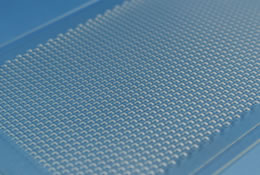
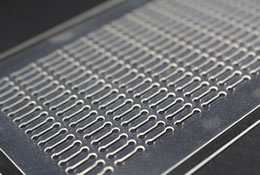
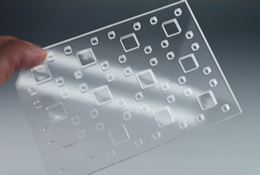
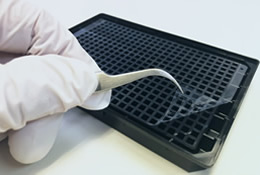
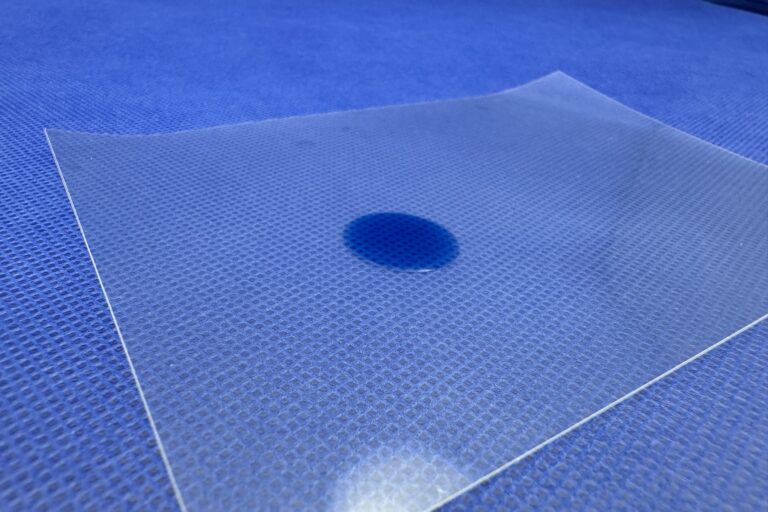
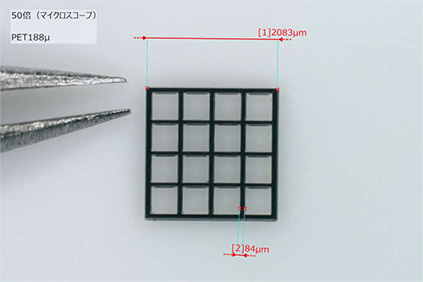
CSTEC excels at manufacturing microplates using precision die-cutting technology cultivated over many years and the latest laser processing machines. Using low-extraction tape, we can create multiple holes on resin sheets in any shape. For example, by attaching a processed sheet inside one well of a commercial microplate, you can culture cells at a higher density than regular culture, enabling the creation of unique microarrays without incurring high initial costs.
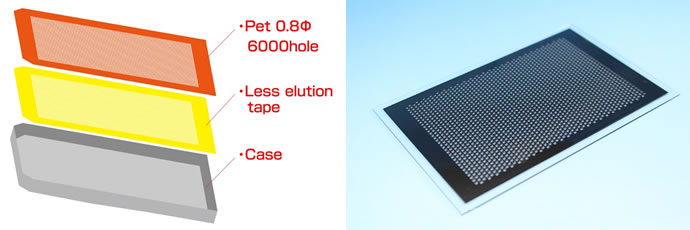
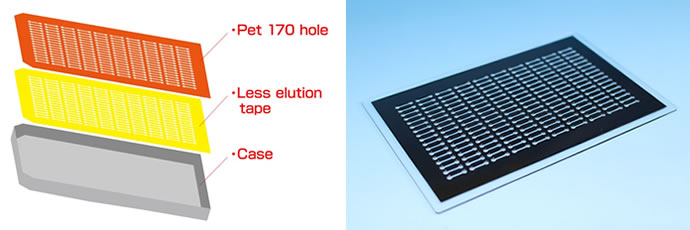
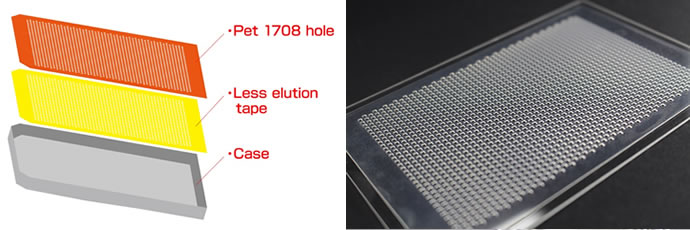
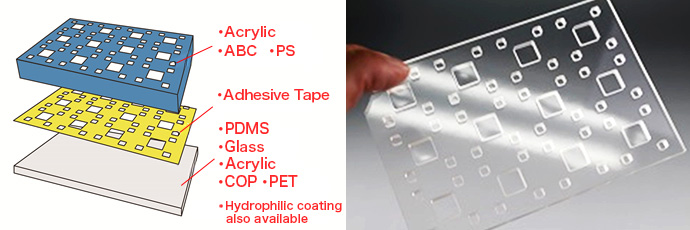
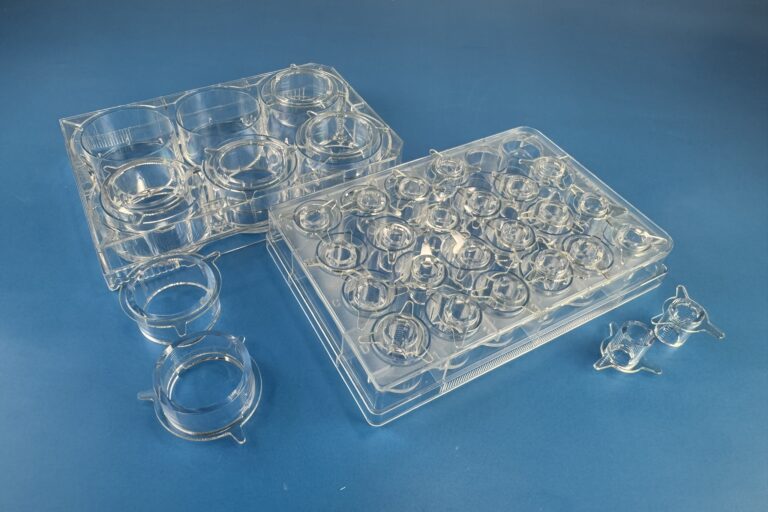
At CSTEC, we can manufacture microplates for cell culture applications in laboratory experiments just from a single piece. Based on customers’ requirements, we can produce according to unique specifications, even if it is detailed requests. We support sizes from slide glass to microplate, and by combining laser processing and lamination techniques, we can meet demands for multiproduct and small-lot production.
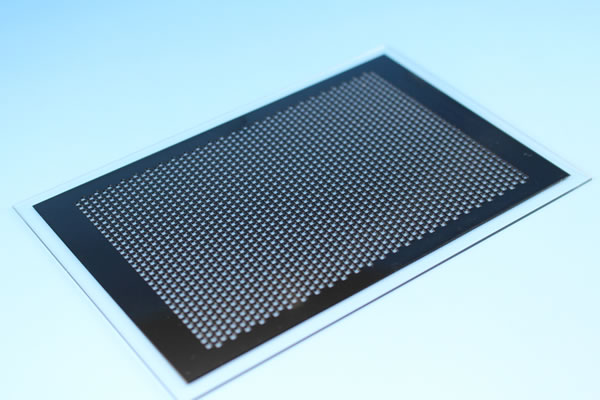
Microarray with glass + PET film hole processing
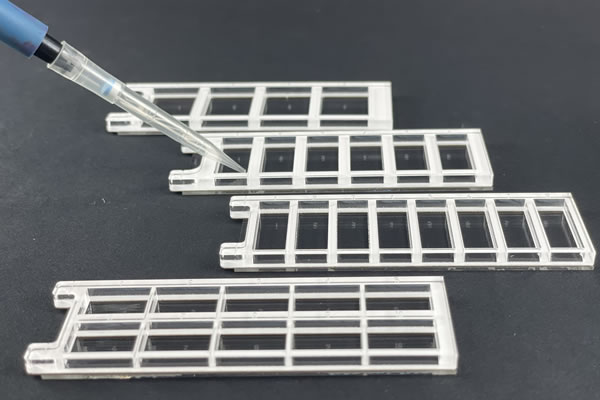
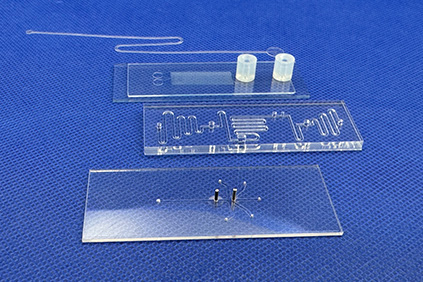
Original partition with slide glass + acrylic
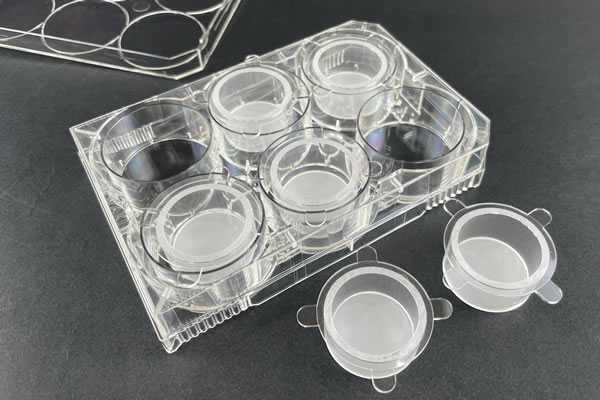
Original mesh for 6-well insert
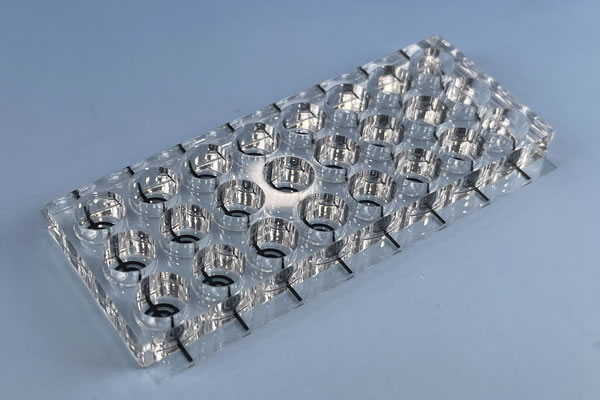
Electrode processing on the bottom of plate
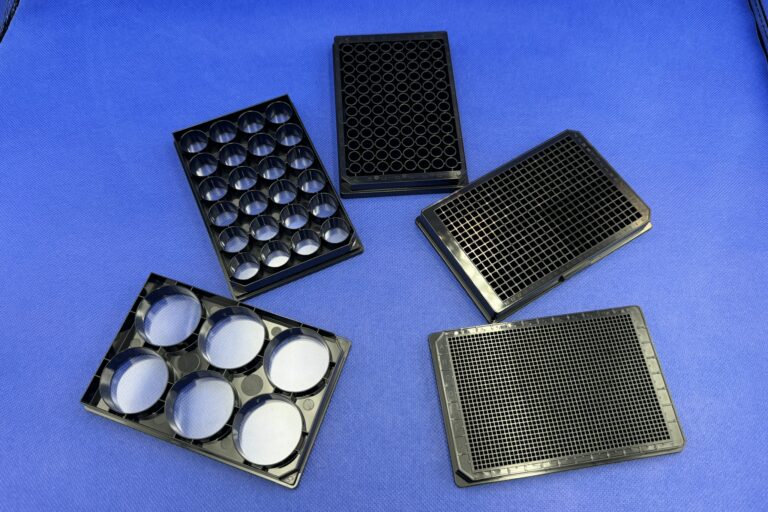
At CSCRIE, we offer various types of bottomless microplates, including 6-well, 24-well, 96-well, and 384-well. We can laminate materials on the bottom of the microplate according to your research needs. Cell culture plates can be manufactured starting from a single piece, and they can also be used as bottomless plates conforming to standard, allowing measurements with a microplate reader. Additionally, by combining wells and films, multiple holes can be created, or wells can be connected with channels. Even for fine grid patterns like 384-well plates, we can apply tape with high precision. Standard products of these bottomless plates are sold by our sister company, CSCRIE. Please check their website.
Bottomless microplate
6-well, 24-well, 96-well, 384-well
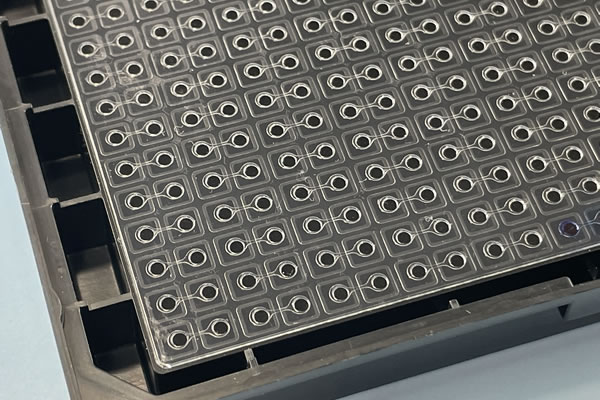
Creating original channel on bottomless plate
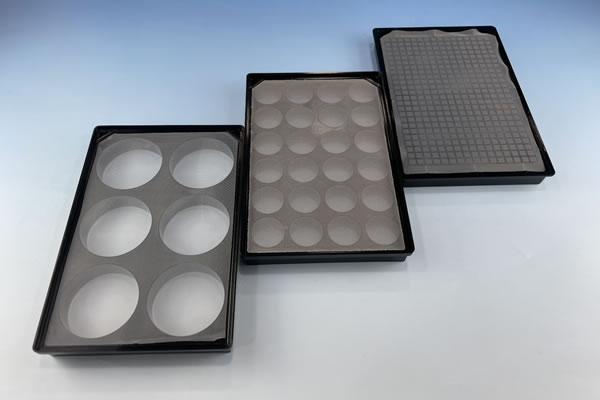
Lamination of mesh on bottomless plate
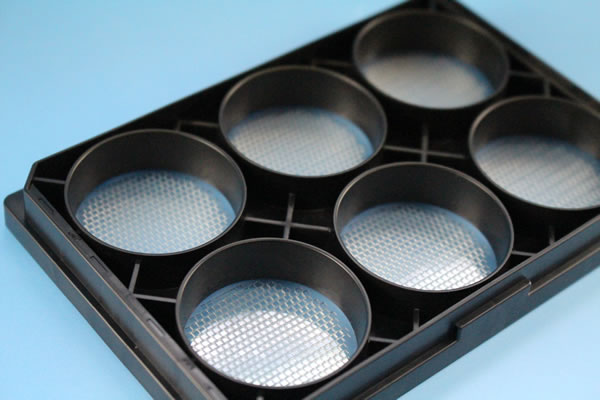
Lamination of mesh on bottomless plate
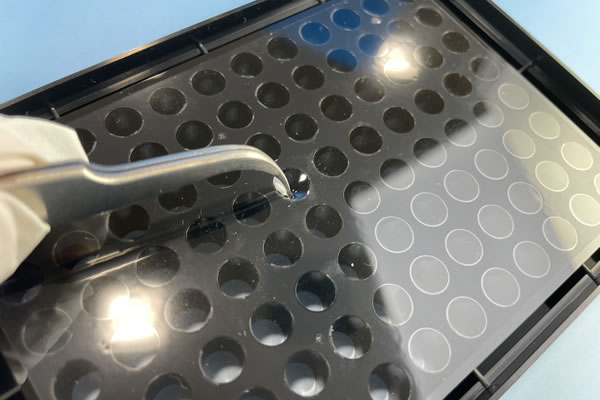
Lamination of PDMS sheet on bottomless 96-well plate
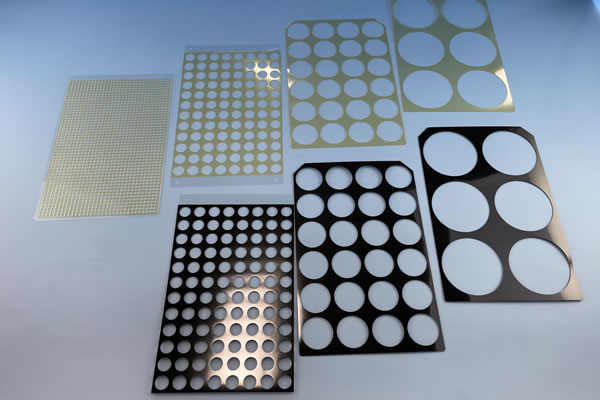
Adhesive tape for laminating bottomless plate
CSTEC handles processing of microplate seals and adhesive tape for the bottom of plates, and lamination of components. We manufacture and process seals with shapes different from commercial microplate seals, for example, microplate seals with oxygen permeability functions, starting from small quantities.
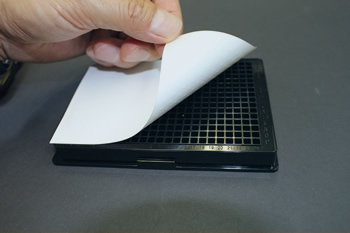
Microplate seal with a aeration membrane allowing ventilation.
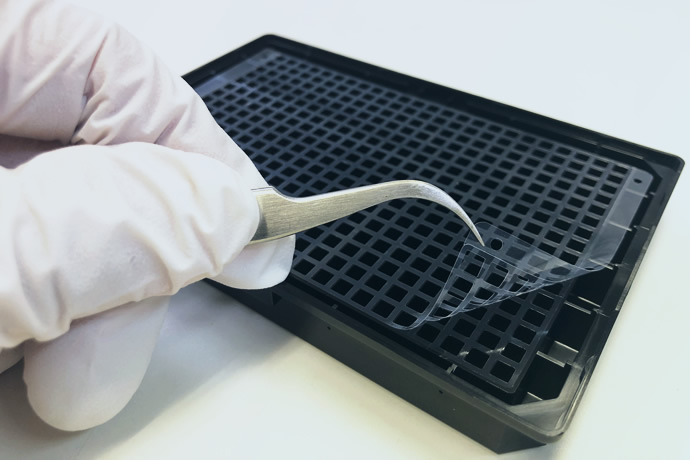
Example of adhesive tape lamination on the bottom of a 384-well microplate. Glass or PDMS sheet lamination to here is also possible.
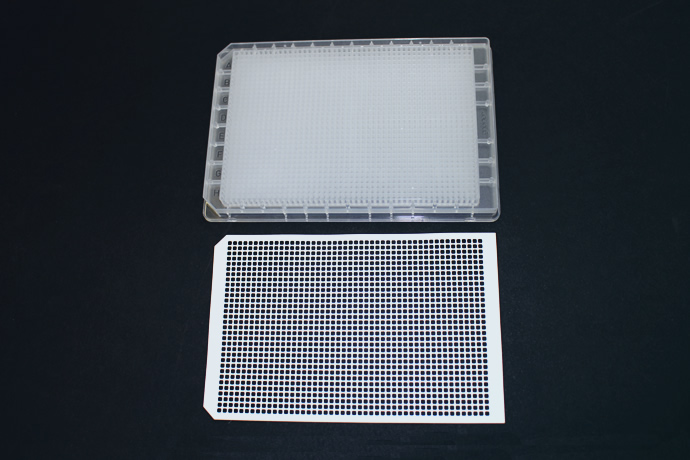
Example of double-sided tape processing for 1536-well plates.
At our company, we can create microplate seals meeting to customer requirements. We also sell plate seals combined with various materials, plate seals with perforation lines, and plate seals that allow notes to be written. For detailed information on these products, please find the website of CSCRIE.
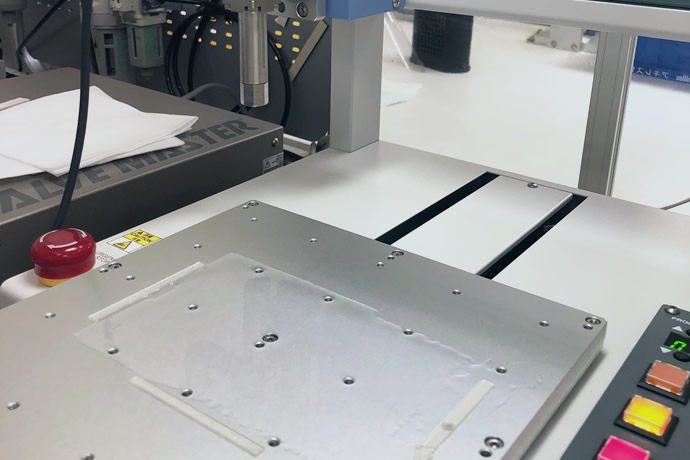
At CSTEC, we can apply hydrophilic coating to microplates upon request. Hydrophilic coating is expected to reduce protein adsorption and cell adhesion.
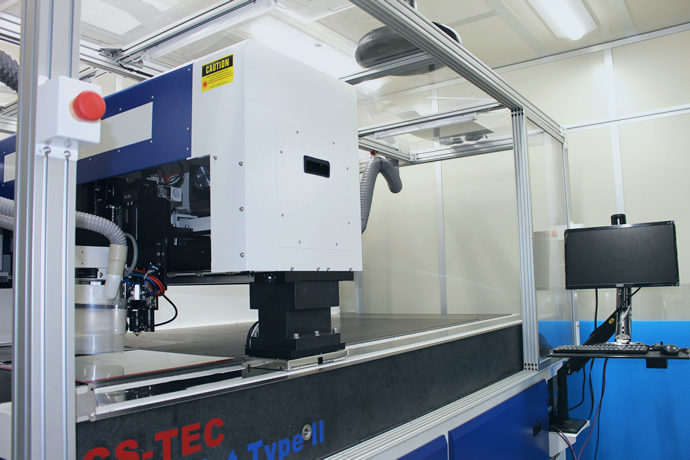
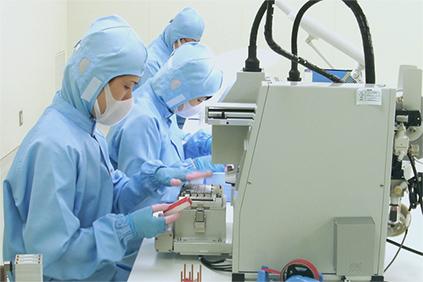
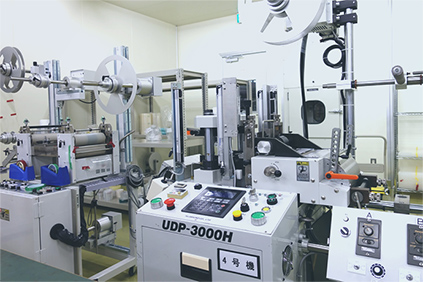
CSTEC is fully equipped for microplate processing. We have laser processing machines for fine microarray processing, precision press machines and plotter machines for processing microplate seals, sprayers for hydrophilic coating, equipment for plate lamination, pressure degassing devices to reduce air bubbles during lamination, and ink-jet devices for printing LOT number inside microplates.
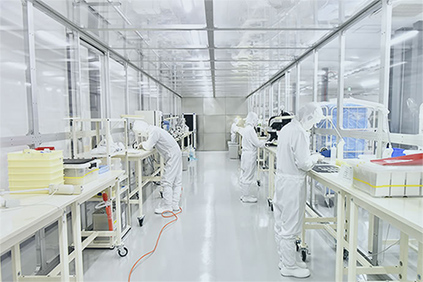
We also have a unique super cleanroom (ISO Class 1) facility, so you can trust us for processing in a clean environment.
As the name suggests, the plate has no bottom. By attaching functional films, glass, or other materials with channels, you cam create your own original microplate.
Yes. In addition, processing such as plasma or coating on film or glass is also possible.
Yes. After the meeting, we will make a drawing and confirm with you if it meets your requirements before starting production.
We can make from one piece. Delivery time depends on the requirements, but it is about 2 to 3 weeks.
Yes. Final packaging and gamma-ray sterilization are also available.