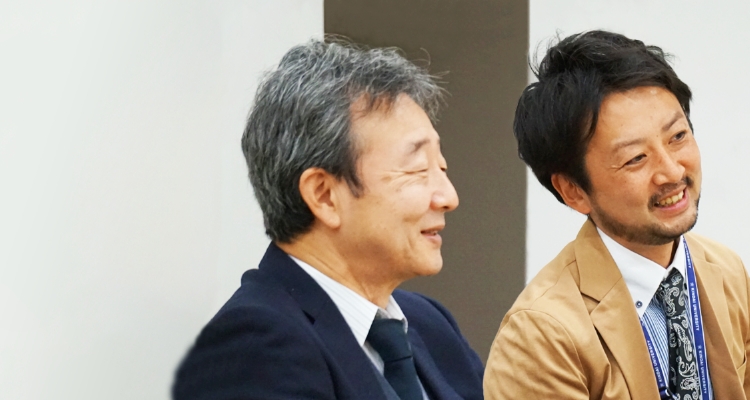

Laboratory of Analytical Chemistry for Pharmaceutical Sciences, Faculty of Pharmacy, Kindai University is engaged in research on high-sensitivity concentration methods for microchip electrophoresis, fully automated analysis of glycoprotein glycans, and quality control of glycoprotein pharmaceuticals using affinity capillary electrophoresis.
(https://www.phar.kindai.ac.jp/analche2/)
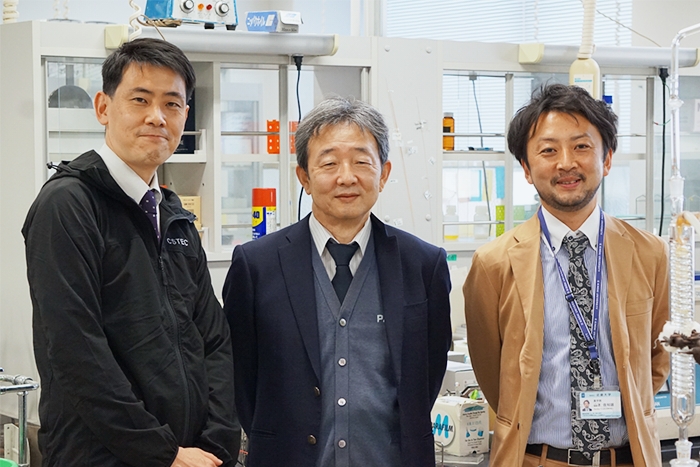
We interviewed the Laboratory of Analytical Chemistry for Pharmaceutical Sciences, Faculty of Pharmacy,
Kindai University to learn how CSTEC is involved in their research and development,
and CSTEC’s attractivity from the professors’ perspective.
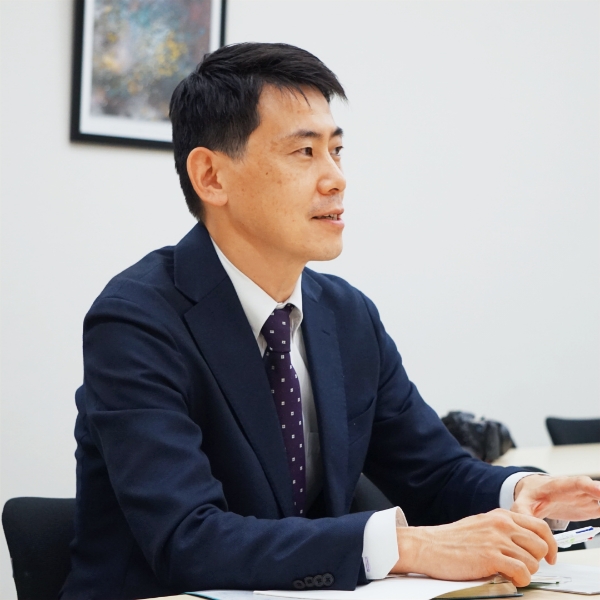
We spoke with Professor Shigeo Suzuki and Lecturer Sachio Yamamoto.
Professor Suzuki:
A friend who was researching exosomes (extracellular vesicles secreted by cells) wanted to analyze them using a microfluidic device. While they are looking for a company that could collaborate, they came across CSTEC. Through that connection, our laboratory also began to ask them on various matters.
Lecturer Yamamoto:
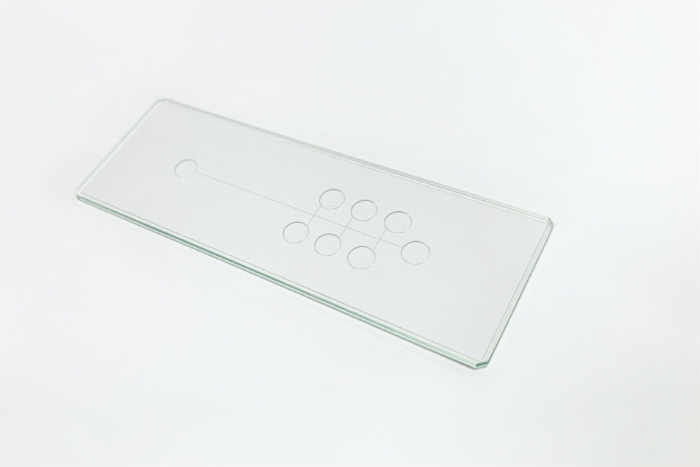
Specifically, we asked CSTEC about microchannels, which are essential for our research. There are companies that sell microchannels, however, they did not fit our research. Some companies offered custom made microchannels but the quotes even the prototyping stage were extremely high, and we were at a loss. We tried producing with different polymer materials by ourselves, but it did not work. CSTEC’s ability to produce microchannels at low cost using laser processing technology has been a big help.
Professor Suzuki:
As we are in the Faculty of Pharmacy, we do not have much know-how when it comes to making microchannels. That is why having a partner like CSTEC is so appreciated.
CSTEC :
We produce microchannels using laser processing and film bonding techniques. As we do not need to make molds, we can respond quickly and cost-effectively to the requests. For university researchers, most projects are trial, so mold-based production does not match to their needs. Allowing repeated trial and error many times is a big advantage.
Professor Suzuki :
I think this is truly amazing.
Lecturer Yamamoto :
We have had a lot of trial and error. At the beginning stage, the microchannels itself reflected light too strongly, and making it difficult to observe the movement of samples in the channels. After repeated meetings and prototyping, the results are excellent now. We are planning to submit to the paper about our findings.
CSTEC :
We are happy to hear that this kind of collaboration was appreciated.
Professor Suzuki :
There are other universities doing research in the similar field. Some of them are large-scale projects, but they approach their research from a different side. CSTEC’s approach fits our research style, and we truly value CSTEC as a great partner.
Lecturer Yamamoto :
Some labs in the university make microchannels on their own. Though the scale and size are different, if they created extremely fine channels, succeeding only once out of ten attempts is very common. Thanks to CSTEC, we do not have such stresses. If we can publish research with CSTEC, other labs may conduct studies using microfluidic chips more easily.
Lecturer Yamamoto :
In the future, I hope they evolve in a more compact and practical testing device. By combining it with our research theme about glycans, I would like to see it applied in various fields, including medicine!
Professor Suzuki :
If Yamamoto’s research goes well, the testing device powered by USB might be developed. Actually, I will be retiring soon. I hope the staffs in our lab will aim to establish testing and analytical methods across different fields.
I thought I would like be of more help to the research!
For example, detecting various pathogens currently takes time now, but if our technology can shorten detection times, that should be a big advancement and we are happy.
Having said that, research takes time, so we will continue to work closely with the researchers and hear the latest trends and challenges, solving problems together. As a result, our technologies also improve.
We aim to keep growing together.
