

AFI Corporation, a company conducting R&D on innovative cell and bacterial separation and analysis devices using their unique “FES” technology that leverages microfluidic channels and dielectrophoresis.
AFI Corporation was founded in May 2013. They develop and sell made-to-order FES units that separate cells under various conditions, as well as the “ELESTA” bacteria test system, which enables real-time estimation of viable organism that would take several days when using conventional methods. The company aims to popularize devices for cell and bacterial separation and analysis.
(https://www.afi.co.jp/)
How has CSTEC been involving in AFI Corporation’s research and development?
What makes CSTEC attractive from AFI Corporation’s perspective?
We interviewed Mr. Wakisaka, Principal Researcher at AFI Corporation, about our joint development.
At the core of our R&D is our proprietary technology, called FES.
By leveraging FES, we achieve selective separation and concentration of cells and bacteria from liquid samples.
For example, “ELESTA”, the product which we launched in spring 2016, enables real time microbial testing in food products – previously requiring 2-3 days.
Traditional testing methods required cultures to make bacteria easier to detect, which took several days. Our company overturned this conventional approach by developing a unique method: capturing live bacteria using FES. This enables selective extraction of live bacteria in real-time.
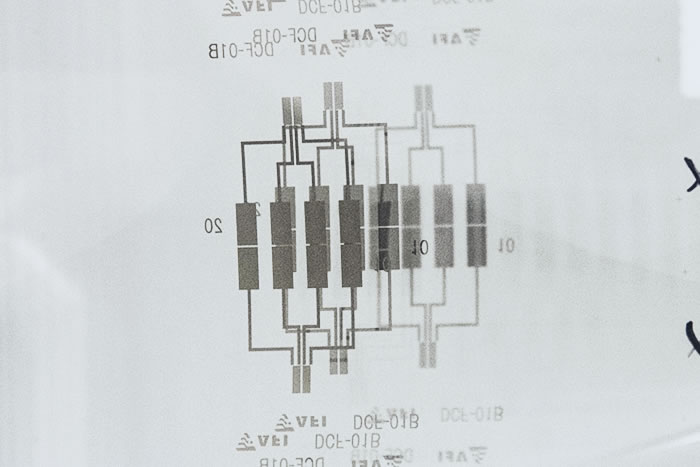
The principle of FES is designing and combining microfluidics and dielectrophoresis to capture and isolate specific cells.
Microfluidics and dielectrophoresis are highly compatible. Dielectrophoresis is effective in microscale spaces, making it ideal for integration into microchips.
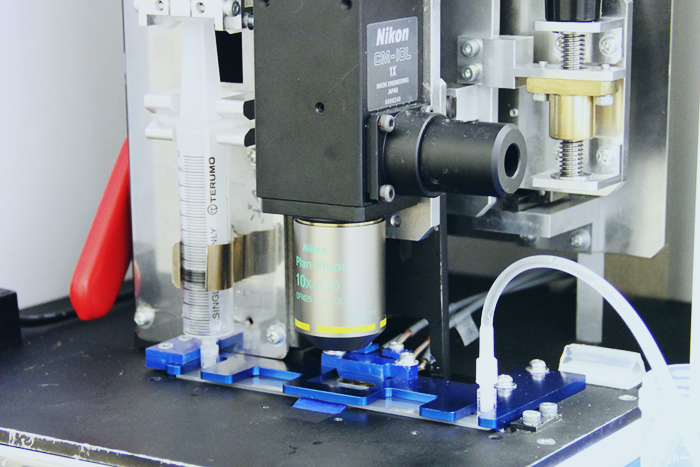
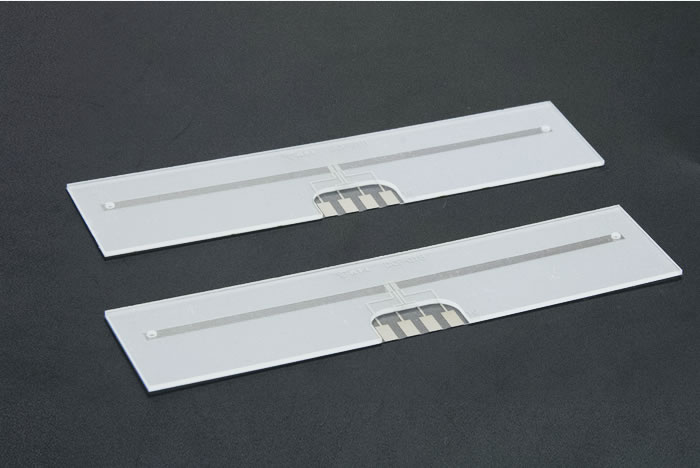
To fabricate high-performance FES, the fabrication of microfluidic chips is critical, and we are focusing on this process.
Two main issues : cost and the smoothness of processed surface of sections.
Normally, microfluidic chip processing is outsourced, and using resin for machining requires significant costs.
Moreover, during research, we had to do experiment and evaluate with various chip formats and channel sizes. Even slight changes require manufacturing a new chip from scratch, which adds extra times to cost.
To reduce costs, we tried outsourcing microfluidic processing to a laser processing vendor, but we faced another problem – the processed surface of sections were rough. It puzzled us about what to do next.
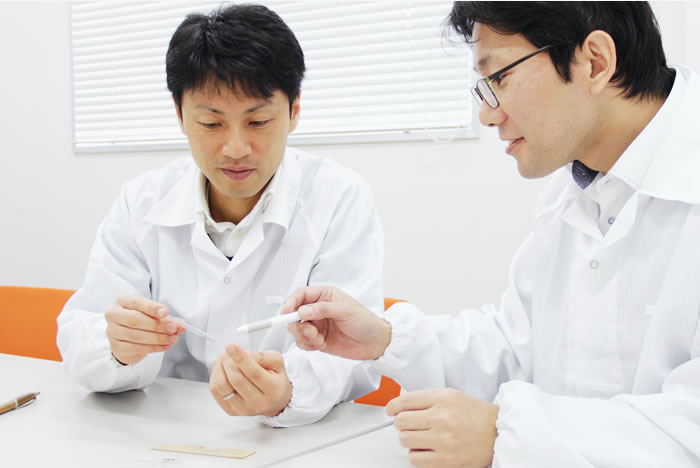
Around 2015, our lab was located in the same Kobe Healthcare Industry Development Center (HI-DEC) as CSTEC. At a researcher networking event held in this center, we had the chance to talk and learned they were working on PDMS microfluidic processing. We decided to give them a try.
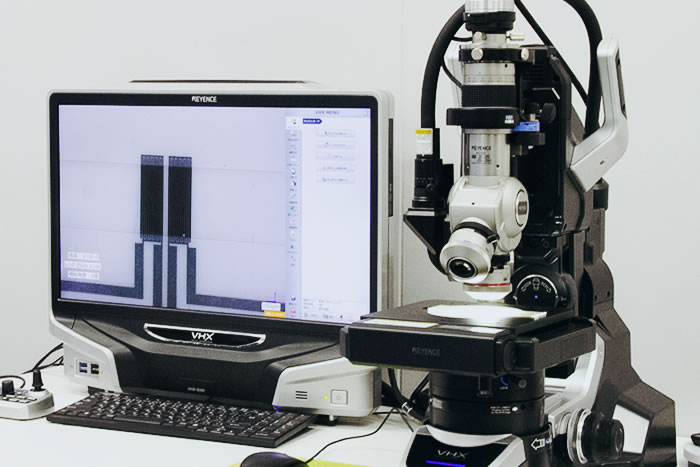
When we checked the processed microfluidic chip under a microscope, we were surprised at the smoothness of surface of sections.
I thought that “I have never seen such smoothness like this! This can be used for our R&D!”, and immediately decided to order to CSTEC for future microfluidic chip processing.
Significant cost and time savings are a major advantage.
As it is laser processing, with only CAD data, they can quickly produce chips in various formats. Their flexibility has been a huge help.
At the fastest case, they even produce chips in the same day we place the order, drastically reducing time and cost and keeping our R&D moving smoothly.
Additionally, since we’ve been working with CSTEC from the prototype stage, they have provided us with many suggestions such as cost-saving points for mass production and packaging solutions, besides microfluidic processing. Today, CSTEC is our indispensable partner.
First, we want to increase the number of installations. As the conventional food inspection method has been used for decades, switching to a new inspection method is a major undertaking for the companies to adopt it.
However, with the current inspection methods used in food factories, products must be stored in a warehouse for two to three days until the test results are available. Moreover, if there is an issue with the results, all the food stored for those two to three days must be discarded, which leads to significant costs.
By using “ELESTA”, results can be obtained in real time, reducing both warehouse costs and losses from discarding food due to inspection issues. As a result, costs can be significantly reduced, so we strongly hope customers will adopt it. It is easy to operate, and once the workflow is set, it can be used routinely.
In the future, as our inspection method becomes more widespread, adopting “ELESTA” will enhance trust in hygiene standards. We also hope local retailers, such as cake shops, will use it and make reliability one of their selling points. Additionally, we are considering expanding of “ELESTA” to overseas food suppliers, where concerns about hygiene are often known.
After the interview with AFI Corporation, we realized that our mission is how to respond to customers’ needs for quality and cost, and how to bring it for mass production.
We believe that researchers are very focused on mastering the technology in front of them, which makes it difficult for them to think about the points and methods required for packaging and mass production. We, CSTEC would like to remain as a partner that can take care of those aspects beyond research. During R&D, excessive quality and processing may be acceptable, but in mass production, excessive quality leads to increase of costs and ultimately makes widespread adoption harder.
In the case of AFI Corporation, as we took care of them from the prototype stage, we were able to clearly define which points needed for cost reduction and which could remain as is, and we proposed essential points necessary for mass production.
We will continue to make proposals that leverage CSTEC’s technology and experience so that researchers could focus solely on their research.
